


Vinyl Acetate Monomer HQ 25-30 · inhibitor 25-30 ppm
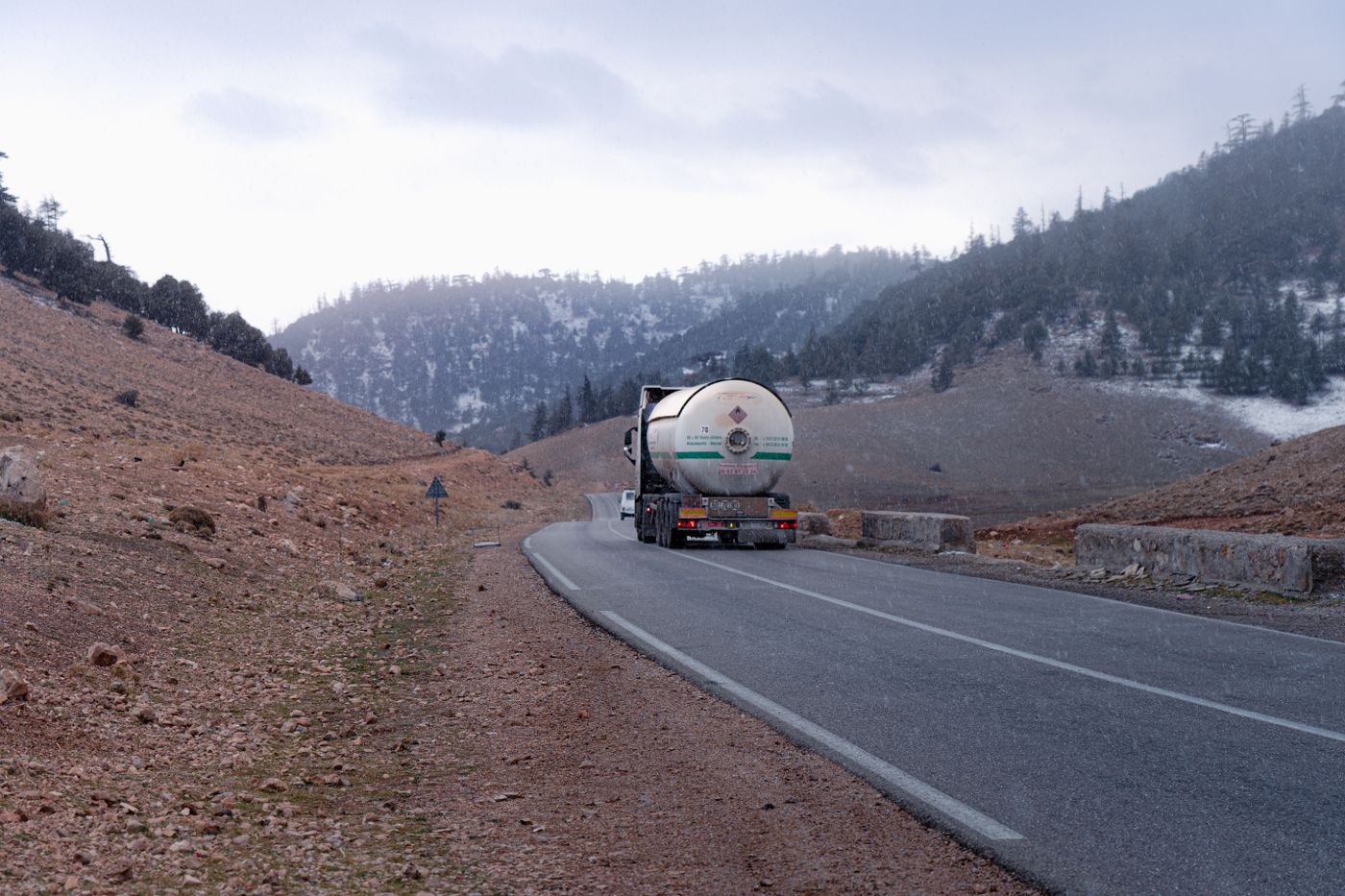
The highest inhibitor band in the series, for very long transit, multi-port routings and hot-climate storage. It is chosen when the journey cannot be shortened, and it comes with a planning consequence: the higher loading can lengthen induction time, so the receiving recipe has to be checked rather than assumed. Cargo at this level is normally tracked leg by leg, with analysis at loading and discharge.
Typical values, not for specification. Batch certificate governs delivery.
| Chemical name | Vinyl Acetate Monomer (VAM) |
|---|---|
| CAS / EINECS | 108-05-4 / 203-545-4 |
| Formula / MW | C4H6O2 / 86.09 |
| Appearance | Clear, colourless liquid, free of suspended matter |
| VA purity | ≥ 99.9 wt% (typical) |
| Water | ≤ 200 ppm (0.02 wt%, typical) |
| Acidity as acetic acid | ≤ 50 ppm (typical) |
| Acetaldehyde | ≤ 50 ppm (typical) |
| Methyl acetate | ≤ 50 ppm (typical) |
| Ethyl acetate | ≤ 250 ppm (typical) |
| Colour | ≤ 5 Pt-Co (typical) |
| Distillation range @760 mmHg | 72.3 – 73.1 °C |
| Density @20/20 °C | 0.9320 – 0.9345 g/cm³ |
|---|---|
| Boiling point | 72.7 °C |
| Melting point | − 93.2 °C |
| Flash point (closed cup) | − 8 °C |
| Autoignition temperature | 385 – 427 °C (source dependent) |
| Explosive limits in air | 2.6 – 13.4 vol% |
| Vapour pressure @20 °C | 11.7 kPa |
| Vapour density (air = 1) | 3.0 |
| Solubility in water @20 °C | ≈ 2 g/100 mL |
| Refractive index n20/D | 1.395 |
| Inhibitor (hydroquinone, HQ) | 25-30 ppm |
| Storage stability | Depends on temperature, oxygen availability and inhibitor consumption; periodic HQ and polymer re-test recommended |
Protection and reactivity pull in opposite directions. This section explains what a high loading does to a polymerisation and how a plant decides whether the balance is acceptable.
A higher inhibitor figure can extend the induction period before conversion begins. The effect is recipe dependent rather than universal, which is why the answer has to come from the plant own batch record instead of a general figure.
Confirm how much residual inhibitor the recipe can tolerate before conversion slows beyond the cycle time. For most recipes the loading is small relative to the batch, but the check is worth making once and writing down.
Run a qualification batch when moving from a lower band to this one. A single qualifying batch tells you more about the interaction than any amount of discussion about ppm values.
Removing or neutralising inhibitor is a process decision that belongs to the plant design, not to an operator action at the tank. Attempting it in an unengineered way is a hazard, and this page does not describe a method.
Stainless steel or aluminium only. Confirm the headspace practice against documented supplier guidance instead of assuming a nitrogen blanket is protective.
Map every leg and every handover before booking. Multi-port routings accumulate yard time, and the yard is where the highest temperatures are usually met.
Test on arrival and again before charging. Two results bracket the storage period in the plant, which is the part of the journey the supplier cannot see.
Shade the tank, ventilate the area and confirm the headspace arrangement. A high band does not remove the need for a defined storage practice.
Stainless steel or aluminium wetted parts, no copper alloys, no rusted fittings. At high loading the consequences of a contaminated surface are no smaller than at low loading.
Each route below links to the application map for the full grade set.
Plants on long inbound routes
Binder works in hot climates
Projects with uncertain delivery timing
Coating kitchens holding distant stock
Every export lot ships with a batch certificate of analysis.
Compare the inhibitor band, storage window and delivery form side by side.
Technical, knowledge and commercial notes written for this product line.

Send your required volume, delivery form and site for Celanese VAM HQ 25-30; we reply with the matching grade, the batch documentation and the shipping window.
 +8615380400285
 sales2@liwei-chem.com
 +8615380400285
 Fred Wang

 Scan to WhatsApp